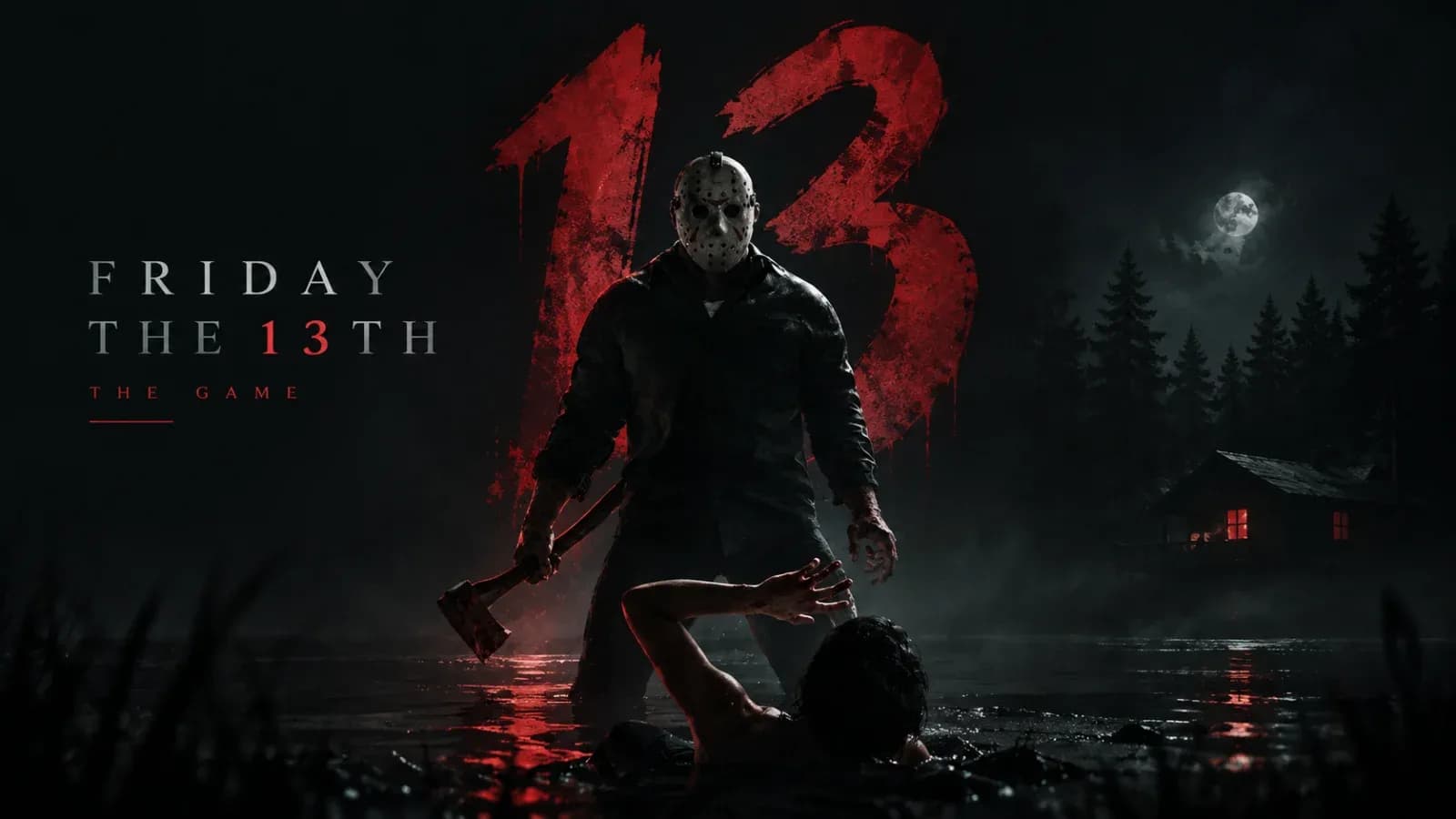
Let's Talk About the Game That Ruined "It's Just a Jump Scare Simulator" Forever
Somewhere out there, someone's still defragging their PS4 hard drive hoping the servers for Friday the 13th: The Game magically come back online. Respect to that person. They understand something a lot of newer horror-game fans missed entirely: this wasn't just "Dead by Daylight but with Jason." This was an entire ecosystem of paranoia, built brick by brick around one guy in a hockey mask who genuinely could not be reasoned with.
Illfonic's creative chief just spent an interview explaining that games built purely around one horror IP hit different than generic killer-roster games. Cool theory. Except Illfonic already field-tested that theory years ago, and the results were basically a masterclass in mass panic simulation.
You didn't play a round of Friday the 13th. You survived one. Sometimes barely. Sometimes not at all, screaming into your mic as the game camera did that horrible cinematic kill-cam zoom.
So let's actually dig into the mechanics, because this game deserves more than a nostalgic footnote — it deserves a full autopsy.
Playing Jason Wasn't "Playing a Killer." It Was Playing God, Badly
Here's the thing people forget: Jason wasn't just a fast, strong murder-man. He had an entire toolkit that made every match feel like a slasher film directed by a sadist with a controller.
Shift + Morph: The Combo That Ruined Friendships
Jason's two signature abilities were Shift (burst speed, near-silent) and Morph (instant teleport to any point on the map he'd already scouted). Combined? You could be casually looting a cabin, feel safe because "he's on the other side of the map," and then Jason materializes behind you like he just got a group text saying "she's alone now."
- Shift — close distance in seconds, silent enough that headphones users would still get jumpscared
- Morph — relocate across the entire map almost instantly, turning "I'm safe over here" into a lie
- Sense — briefly highlights every counselor's aura through walls, because subtlety was never the point
- Stalk — hides Jason's terror-inducing music stinger temporarily, so you genuinely couldn't tell if he was near or if your own paranoia was just doing damage on its own
And once Jason took enough damage from counselors fighting back? Rage mode kicked in — permanently faster, no more cooldown penalties, basically the game going "okay, stop pestering him now."
Not All Jasons Were Created Equal
This is the detail that separated Friday the 13th from every reskinned killer roster that came after: there were multiple playable Jason variants, each pulled from a specific movie, each with wildly different strengths and weaknesses.
Want the guy who can grab people underwater and doesn't take fall damage? That's Jason from Part 7. Want the terrifying zombie-strength unkillable version? Part 9's got you. Every single one felt like a different boss fight, not a reskin.
Some Jasons were weak to fire, some resisted it entirely. Some had devastating traps, others leaned harder into pure combat strength. This wasn't cosmetic variety — it fundamentally changed how you had to survive.
Being a Counselor Was a Full-Time Anxiety Job
Now flip to the other side of the mask. Playing a counselor wasn't "run in a straight line and hope." Every counselor had actual stats — Stealth, Speed, Repair, Strength, Luck, Composure — and picking your character was basically deciding what flavor of dying you preferred.
- High Composure characters stayed calmer under pressure, meaning their screen didn't lose visibility from panic
- High Stealth characters could straight-up sneak past Jason if you played it perfectly
- High Repair characters fixed fuse boxes and phone lines faster, which mattered enormously when Jason was Shift-spamming the generator like it owed him money
The Actual Objectives Were a Group Project From Hell
Escaping wasn't just "run to the edge of the map." You had real, layered objectives, and every single one required cooperation with strangers who, statistically, panicked and abandoned you the second things got loud:
- Find the fuse box parts scattered across the map and repair the car or boat
- Fix the phone box and call the police, who'd eventually show up to save literally everyone still alive
- Track down a hidden phone somewhere on the map to call in Tommy Jarvis — a playable character who could straight-up fight Jason on more even footing
- Barricade cabin doors and windows to slow Jason down mid-chase, buying seconds that felt like decades
Here's the twist nobody expected going in: Jason had actual weaknesses baked into the lore, and the game used them. Find Pamela Voorhees's sweater and a specific machete, and a skilled counselor could genuinely, permanently kill Jason for the round. It happened. People screamed. It was glorious.
The Combat Was Chaos, and That Was the Whole Point
Getting grabbed by Jason wasn't an instant death sentence — you'd get a quick-time struggle to break free, and combat-capable counselors could actually fight back with weapons, knives, or firecrackers to stun him. It wasn't reliable. It wasn't meant to be. The tension came from never being 100% sure if your plan was going to work or if you were about to become a kill-cam highlight reel for everyone else in the lobby.
And the Kill Cams. My God, the Kill Cams.
This is where Friday the 13th separated itself from basically everything in the genre before or since. Jason had dozens of unique, cinematic execution animations pulled straight from the movies' visual language — over-the-top, theatrical, occasionally absurd. Getting caught wasn't just "you lose." It was a mini horror-movie death scene, tailored to whichever Jason variant you'd picked, playing out in real time while your entire lobby watched in the post-death spectator camera.
Nothing in the genre before or since has quite matched the specific horror-comedy whiplash of watching your friend get folded in half by Jason while everyone in Discord loses it laughing and screaming simultaneously.
So Why Does Any of This Matter Right Now
Illfonic's whole argument about bespoke horror games versus generic killer rosters isn't theoretical marketing spin. It's a direct callback to a game they already built, one that proved a slasher IP treated with actual love and mechanical depth creates something no mixtape-style roster game has fully replicated since. Every objective, every Jason variant, every counselor stat existed because of Friday the 13th's specific mythology, not despite it.
The servers went dark because of a legal rights dispute that had nothing to do with the game failing players — it had everything to do with a fight over who owned the underlying IP. That's a genuinely different story than "the game wasn't good enough to survive."
And now, with Halloween: The Game facing the exact same lazy "it's just Dead by Daylight" comparisons, it's worth remembering that Illfonic has already shown, in painstaking, chaotic, screaming-into-your-mic detail, exactly what happens when a studio builds a horror game around one specific nightmare instead of renting out a shared one.
If Friday the 13th somehow got its rights sorted and came back tomorrow with modern servers, would you drop everything else in your backlog to relive Camp Crystal Lake — or has the genre moved past what made it special in the first place?